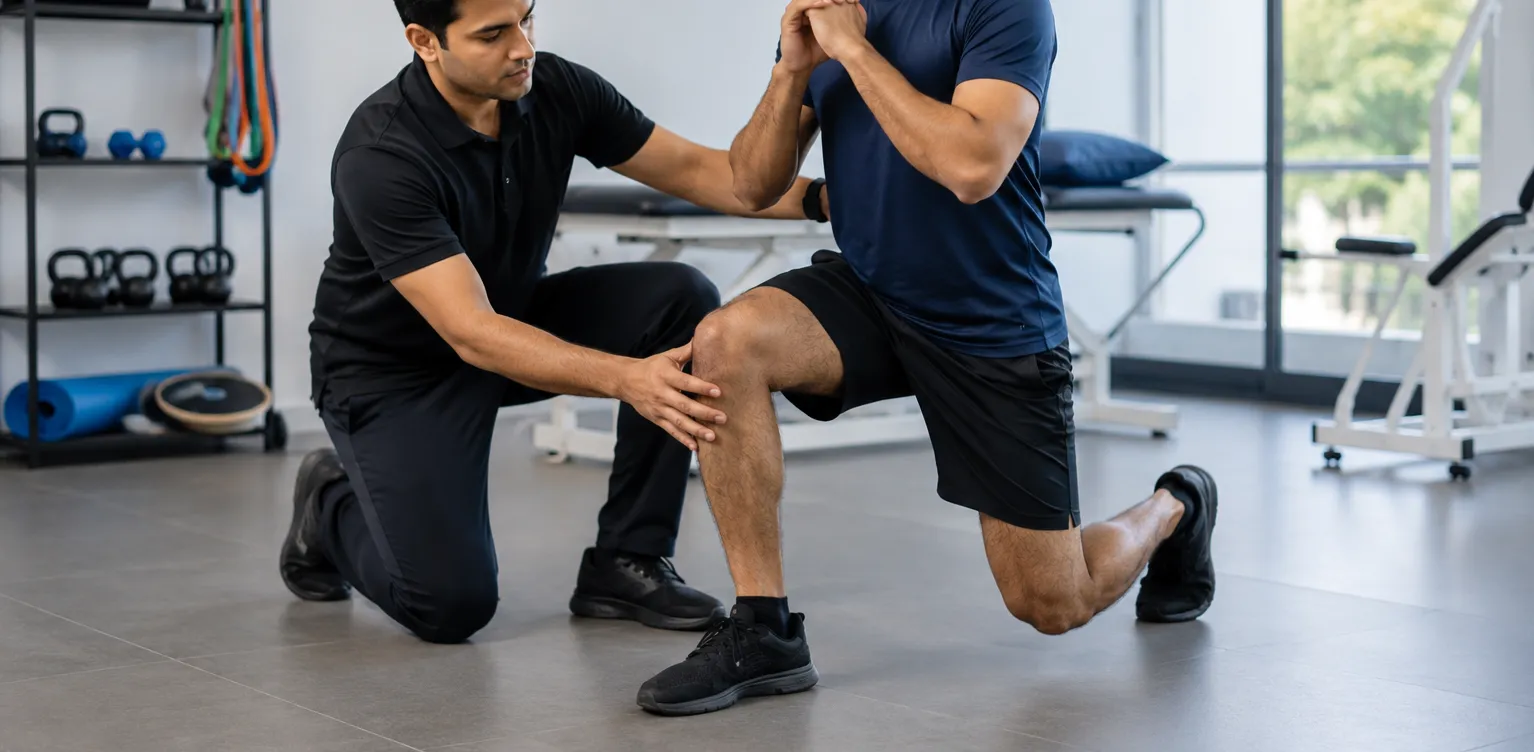
Returning to sport after an injury can create an awkward middle stage. Everyday walking may feel comfortable and basic exercises may no longer cause difficulty, yet sprinting, jumping, lifting, throwing, or rapid direction changes can still feel uncertain. Sports Rehabilitation helps bridge this gap by progressing recovery according to physical capability rather than relying only on elapsed time.
For active individuals in Pune, this distinction can be important when deciding whether they are actually prepared to resume demanding training.
Pain-Free Does Not Always Mean Sport-Ready
Reduced pain is encouraging, but sport places demands on the body that ordinary daily activities may not test.
A recreational runner may walk comfortably while still lacking calf strength for repeated running. A football player may complete basic squats but struggle with single-leg landing control. A gym enthusiast may have comfortable shoulder movement yet lack capacity under heavier resistance.
Rehabilitation therefore needs broader measures of progress.
Useful Milestones During Recovery
Depending on the injury and sport, physiotherapists may evaluate:
- Joint mobility
- Strength
- Balance
- Single-leg control
- Endurance
- Running tolerance
- Jumping and landing ability
- Agility
- Sport-specific movement
- Response to increasing training load
These measures help identify what has recovered and what still needs development.
Calendar-Based Recovery Has Limitations
People often ask exactly how many weeks an injury will take to recover.
Time certainly matters because tissues require appropriate healing periods. However, two people at the same stage after a similar injury can have different levels of strength, mobility, confidence, and functional capacity.
A milestone-based Sports Rehabilitation programme therefore considers both healing and demonstrated physical ability.
This can make progression more individualized.
Rehabilitation Should Become More Specific
Early exercises often focus on fundamental qualities such as mobility and basic muscle activation. As recovery advances, exercises can gradually resemble the movements required by the individual's activity.
A badminton player may need controlled lunges and multidirectional movement. A runner may progress through graded running exposure. A cricket player may require specific strength and movement preparation related to batting, bowling, fielding, or sprinting.
This transition matters because general fitness does not automatically prepare someone for every sporting demand.
Workload Is Part of the Return
Even when individual movements feel comfortable, suddenly returning to full training volume can create a major increase in physical load.
A gradual transition may involve adjusting session duration, intensity, frequency, resistance, speed, and total repetitions.
Monitoring how the body responds during and after activity can help guide subsequent progression.
Know What Readiness Looks Like
A well-planned return should provide clearer answers to practical questions. Can the injured area tolerate repeated loading? Is movement reasonably controlled when fatigue develops? Can sport-specific tasks be performed with confidence? Has training volume been reintroduced progressively?
Curador Physiotherapy and Sports Rehabilitation Centre in Pune can structure rehabilitation around functional milestones relevant to individual activities and recovery stages.
The value of Sports Rehabilitation lies in making the transition from recovery to performance more systematic. Instead of treating the disappearance of pain as the finish line, rehabilitation can assess whether strength, control, movement quality, and workload tolerance are developing sufficiently for the activities the individual wants to resume.
Keywords