
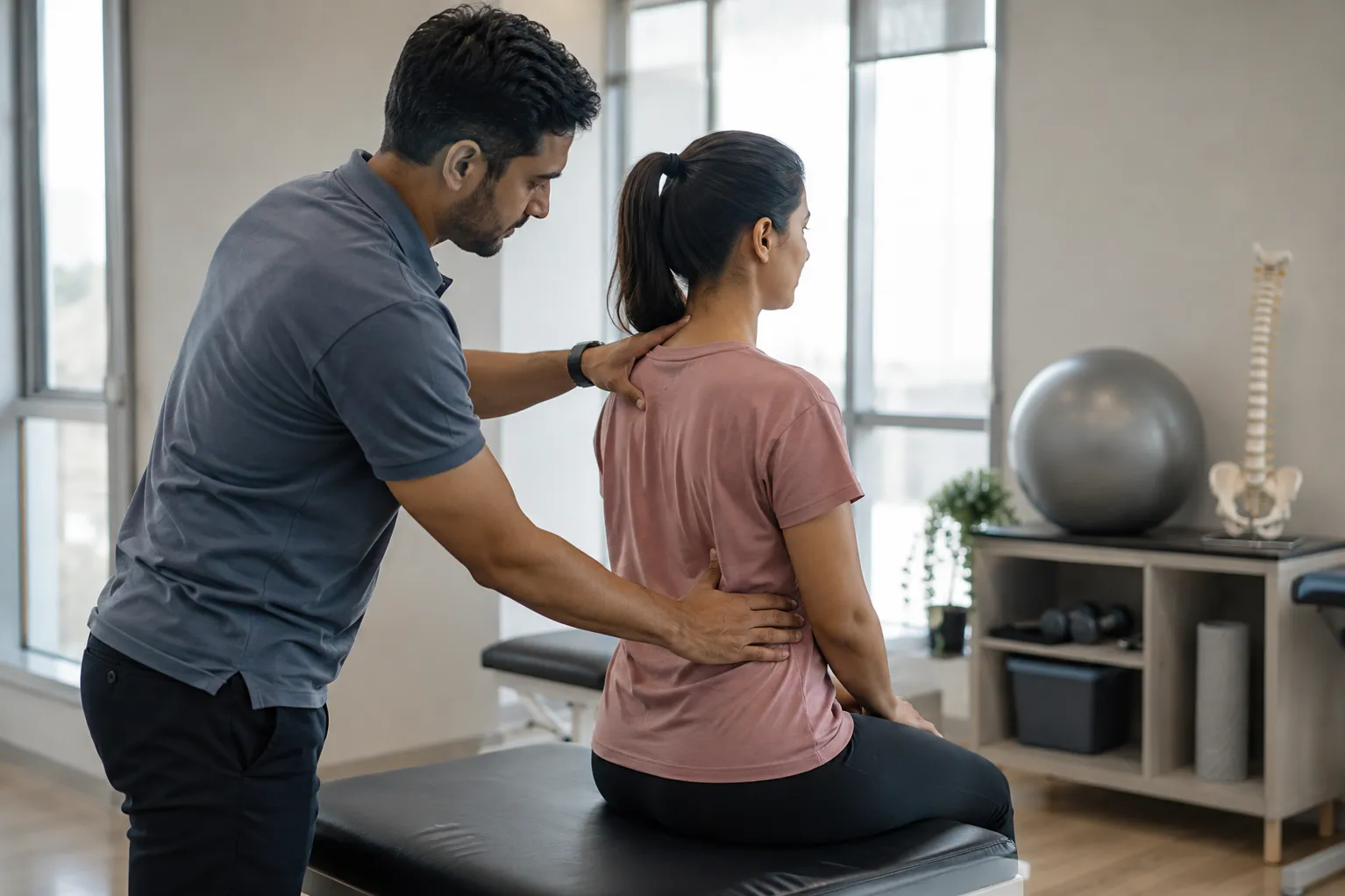
Long hours at a laptop can make neck stiffness, shoulder discomfort, and back fatigue feel almost inevitable. This often leads people to search for Postural Correction, yet posture-related problems are frequently approached through oversimplified advice.
'Sit straight' is rarely enough.
For office professionals, a more useful approach considers movement variety, workstation setup, physical capacity, and how long the body remains in one position.
Mistake 1: Searching for One Perfect Posture
There is no single position that everyone must maintain throughout an eight-hour working day.
Even a seemingly ideal posture can become uncomfortable when held for too long.
Instead of trying to remain rigidly upright, changing position regularly is often more practical.
Alternate between supported sitting, standing where possible, short walks, and movement breaks.
Mistake 2: Correcting the Chair but Ignoring the Body
Ergonomics matter, but changing a chair cannot automatically improve strength, mobility, or endurance.
Someone experiencing upper-back fatigue may need to work on physical conditioning in addition to adjusting the workstation.
Likewise, persistent neck stiffness may require assessment of movement and other contributing factors rather than simply purchasing ergonomic equipment.
Mistake 3: Stretching Everything
Stretching can feel good when the body has remained still for a long period, but not every postural problem is caused by muscles being 'too tight.'
Some people may benefit from strengthening and endurance work.
Depending on assessment findings, exercises might target the upper back, shoulders, trunk, hips, or other relevant areas.
The programme should match the person's limitations rather than automatically relying on stretching.
Mistake 4: Exercising Only When Pain Appears
Corrective exercise is easier to integrate when it becomes part of a regular routine.
Waiting until symptoms become significant can create a repeated cycle of discomfort, temporary exercise, improvement, and abandonment of the programme.
A manageable routine performed consistently can be more practical than occasional intensive sessions.
Mistake 5: Ignoring the Working Environment
Laptop height, monitor position, desk arrangement, seating support, keyboard placement, and working duration can influence comfort.
Professionals working from home may face additional challenges because dining tables, sofas, and beds were never designed as full-time workstations.
This has particular relevance across Pune's large IT, corporate, education, and professional workforce.
Small adjustments can reduce unnecessary strain, particularly when combined with regular movement.
When Physiotherapy Assessment May Help
If discomfort repeatedly interferes with work, exercise, sleep, or daily activity, assessment can help identify whether mobility, strength, movement habits, or workstation factors require attention.
At Curador Physiotherapy and Sports Rehabilitation Centre, postural rehabilitation can combine movement assessment, personalised exercise, practical education, and appropriate physiotherapy interventions.
Postural correction should not mean forcing the body into an artificial position all day.
A better objective is to develop a body that can tolerate the demands of work through adequate movement, strength, endurance, and regular changes in position.
For office professionals, this turns posture management into something much more practical than constantly reminding themselves to 'sit straight.'
Keywords