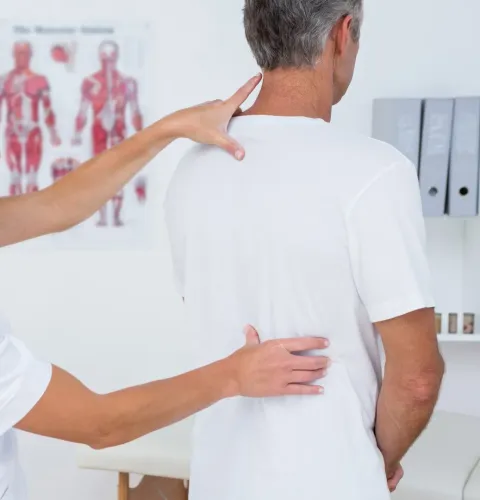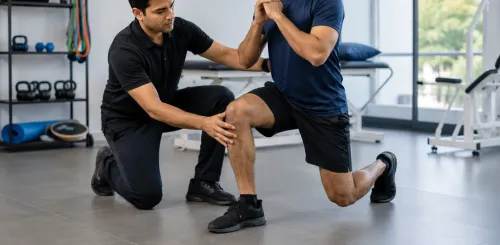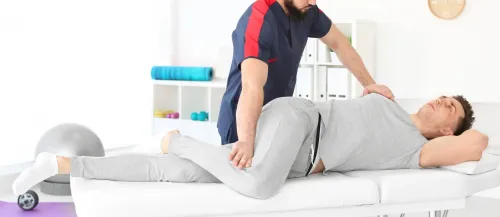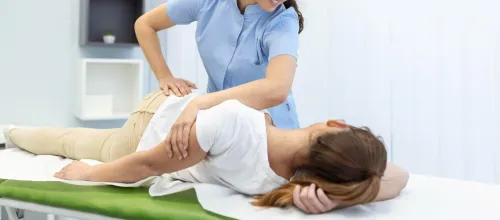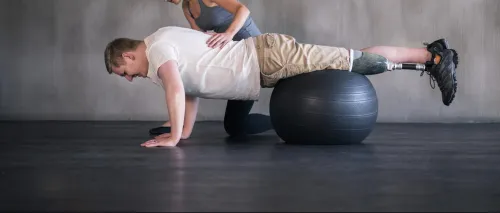
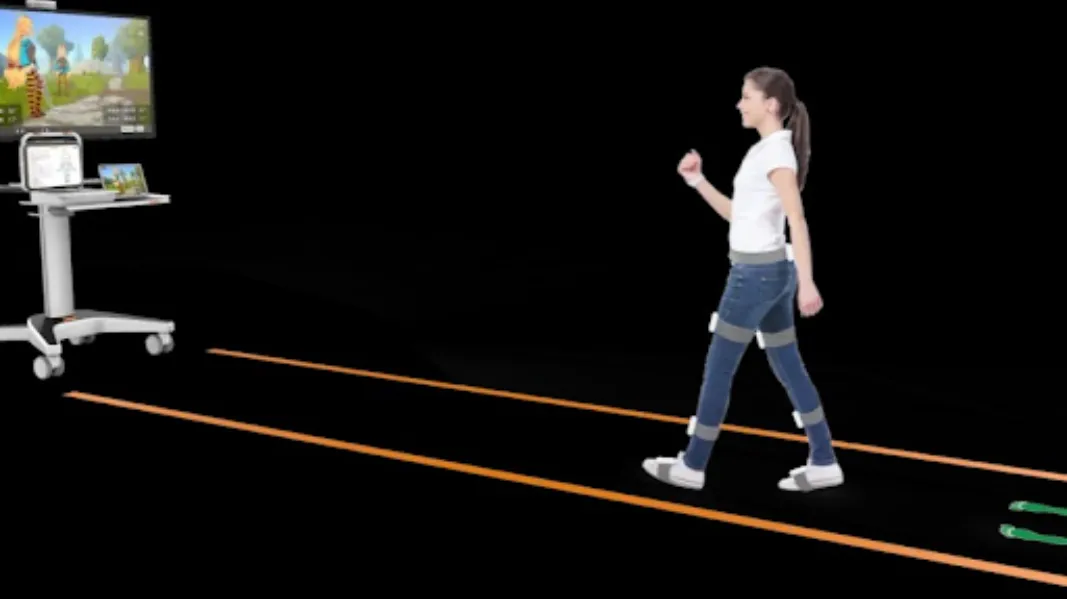
A person can experience repeated knee, hip, ankle, or back discomfort even when the painful area appears structurally capable of movement. In some situations, the way the body walks, runs, lands, bends, or distributes load may provide valuable information. AI-Powered Gait and Movement Analysis adds technology-supported assessment to the physiotherapy evaluation process.
This approach can help examine movement patterns in greater detail, giving physiotherapists additional information when planning rehabilitation.
What Gait Analysis Examines
Gait refers to the way a person walks or runs. Although walking seems automatic, it involves coordinated movement across the feet, ankles, knees, hips, pelvis, and trunk.
A movement assessment may examine factors such as:
- Step pattern
- Weight distribution
- Joint positioning
- Limb symmetry
- Trunk movement
- Balance
- Movement timing
- Functional alignment
Technology-assisted assessment can provide measurable observations that complement physical examination and clinical reasoning.
Small Movement Differences Can Matter
Movement problems are not always obvious to the person experiencing them.
Someone may unknowingly place more weight through one leg after recovering from an injury. A runner may demonstrate differences between the left and right sides during landing. Another person may change their walking pattern because of previous ankle stiffness.
These patterns do not automatically mean something is wrong, but identifying relevant differences can help a physiotherapist decide what needs further assessment.
How Technology Supports Physiotherapy
Traditional physiotherapy assessment remains important because pain history, strength, joint mobility, tissue sensitivity, and functional ability all provide valuable information.
Technology can add another layer of movement data.
When AI-Powered Gait and Movement Analysis is used appropriately, the results can support decisions about exercise selection, movement retraining, rehabilitation progression, and reassessment.
The technology itself is not the treatment. Its value comes from combining the findings with professional physiotherapy evaluation.
Who May Benefit From Movement Analysis
Movement analysis can be useful in several situations.
Athletes may use it when returning to running and sports activity after injury. People recovering from lower-limb surgery may need their walking mechanics assessed as strength and mobility improve. Individuals experiencing recurring discomfort during walking, running, squatting, or other activities may also benefit from a more detailed examination.
It can also support people working on movement efficiency and functional performance.
Tracking Changes During Rehabilitation
One advantage of structured movement assessment is the ability to compare performance over time.
For example, rehabilitation may initially identify reduced control during a squat or noticeable asymmetry during walking. Following a period of targeted strengthening and movement training, reassessment can help determine whether the pattern has changed.
This provides useful feedback beyond relying only on how an exercise feels.
Turning Data Into Practical Rehabilitation
Living in an active city such as Pune often involves substantial walking, commuting, stair climbing, recreational exercise, and participation in sports. Rehabilitation therefore needs to address the movements people actually perform.
Curador Physiotherapy and Sports Rehabilitation Centre can incorporate movement assessment within a broader physiotherapy programme when clinically relevant. The objective is to use assessment findings to make rehabilitation more individualized rather than treating technology as a standalone solution.
AI-Powered Gait and Movement Analysis is most useful when data leads to meaningful action. By connecting measurable movement patterns with strength, mobility, symptoms, and individual goals, physiotherapists can develop rehabilitation programmes that address how a person actually moves in everyday life.
Keywords