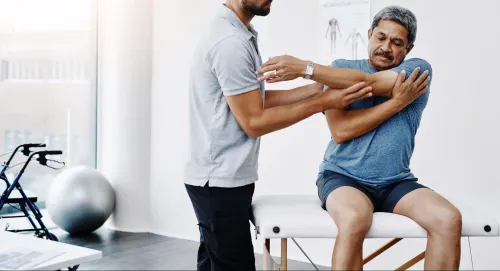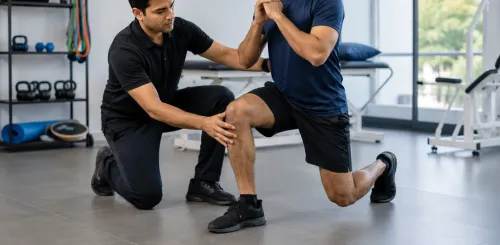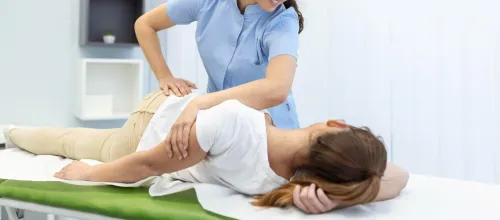
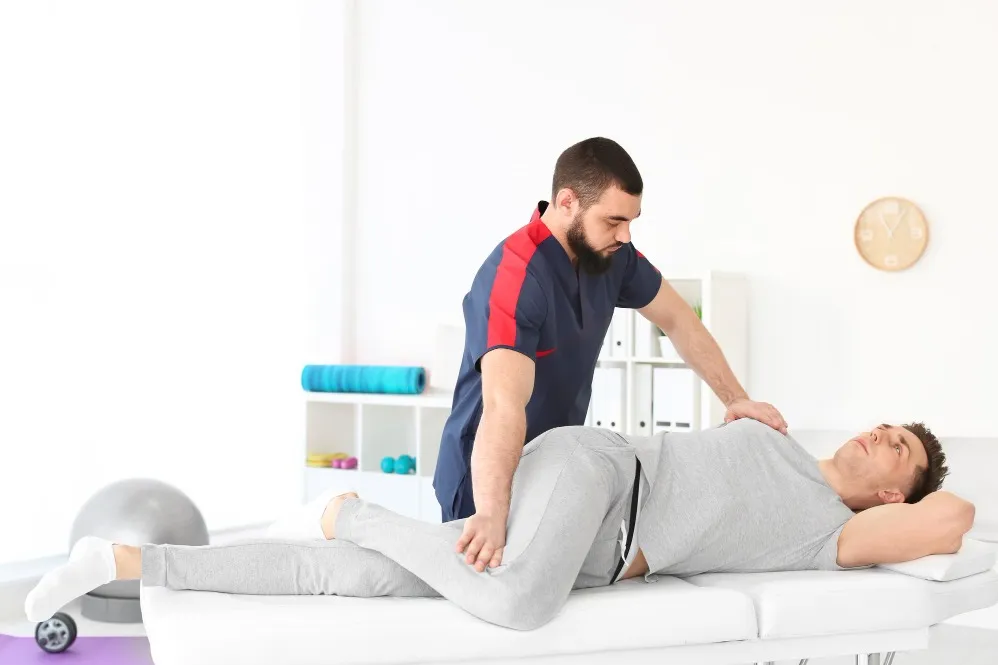
Muscle stiffness, recurring back pain, joint discomfort, restricted movement, and pain after physical activity can gradually interfere with work, exercise, sleep, and everyday mobility. These problems often fall within the scope of musculoskeletal physiotherapy, an area of physiotherapy focused on conditions affecting muscles, joints, tendons, ligaments, and related movement structures.
Rather than looking only at where pain is felt, physiotherapy assessment usually considers how the affected area moves, what activities trigger symptoms, and whether weakness, stiffness, posture, or movement habits are contributing to the problem.
For people in Pune, this can be particularly relevant when long office hours, regular commuting, gym routines, recreational sports, and physically demanding work place repeated stress on the body.
What Does Musculoskeletal Physiotherapy Address?
Musculoskeletal problems can develop suddenly after an injury or gradually through repeated strain. Physiotherapy may form part of the management plan for concerns such as:
- Neck and upper-back stiffness
- Lower-back discomfort
- Shoulder movement restrictions
- Knee and hip problems
- Muscle strains
- Tendon-related conditions
- Joint stiffness
- Sprains
- Mobility limitations after an injury
- Recurring discomfort associated with certain activities
The appropriate approach depends on the underlying problem rather than the symptom alone.
Why Assessment Comes Before Treatment
Two people with knee pain may require very different rehabilitation plans.
One may have reduced hip strength affecting knee control during movement. Another may have stiffness after a previous injury. Someone else may experience discomfort primarily because training volume has increased too quickly.
A physiotherapy assessment can examine areas such as joint movement, muscle strength, flexibility, balance, functional movement, posture, and activity tolerance.
This helps identify which physical factors should receive attention during rehabilitation.
Treatment May Combine Different Methods
Musculoskeletal rehabilitation is rarely based on one technique alone.
Depending on clinical findings, a physiotherapist may incorporate manual therapy, mobility exercises, progressive strengthening, movement retraining, flexibility work, postural guidance, and activity modification.
Exercise is particularly important because improvement needs to carry over beyond the treatment session.
A person recovering from shoulder pain, for example, may need to restore shoulder movement before gradually strengthening the muscles responsible for controlling the joint. Someone experiencing back discomfort may require a combination of mobility, trunk conditioning, and changes to movements that repeatedly aggravate symptoms.
The Importance of Progressive Rehabilitation
Doing too much too soon can aggravate an injury, while avoiding movement for longer than necessary may contribute to weakness and reduced confidence.
Progressive rehabilitation aims to find an appropriate middle ground.
Exercises can be adjusted according to symptoms and functional ability. As movement becomes easier, resistance, repetitions, range, balance demands, or activity complexity may gradually increase.
This progression becomes especially important for people returning to running, gym training, sports, physically demanding work, or regular recreational activities.
Physiotherapy Should Support Everyday Function
Pain reduction is useful, but functional improvement is equally important.
Someone receiving physiotherapy may want to sit comfortably through a working day, climb stairs without difficulty, return to training, lift objects safely, regain shoulder movement, or walk for longer periods.
At Curador Physiotherapy and Sports Rehabilitation Centre, assessment and rehabilitation can be structured around these practical functional requirements rather than treating every musculoskeletal complaint through the same routine.
Musculoskeletal physiotherapy is therefore best understood as a process of identifying movement-related limitations, addressing contributing factors, and progressively rebuilding physical capacity.
For people dealing with persistent muscle or joint problems, understanding what triggers symptoms and how the body responds to movement can be an important first step towards more effective rehabilitation.
Keywords