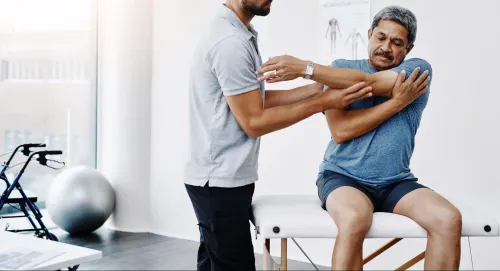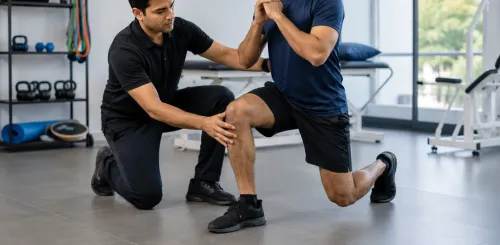
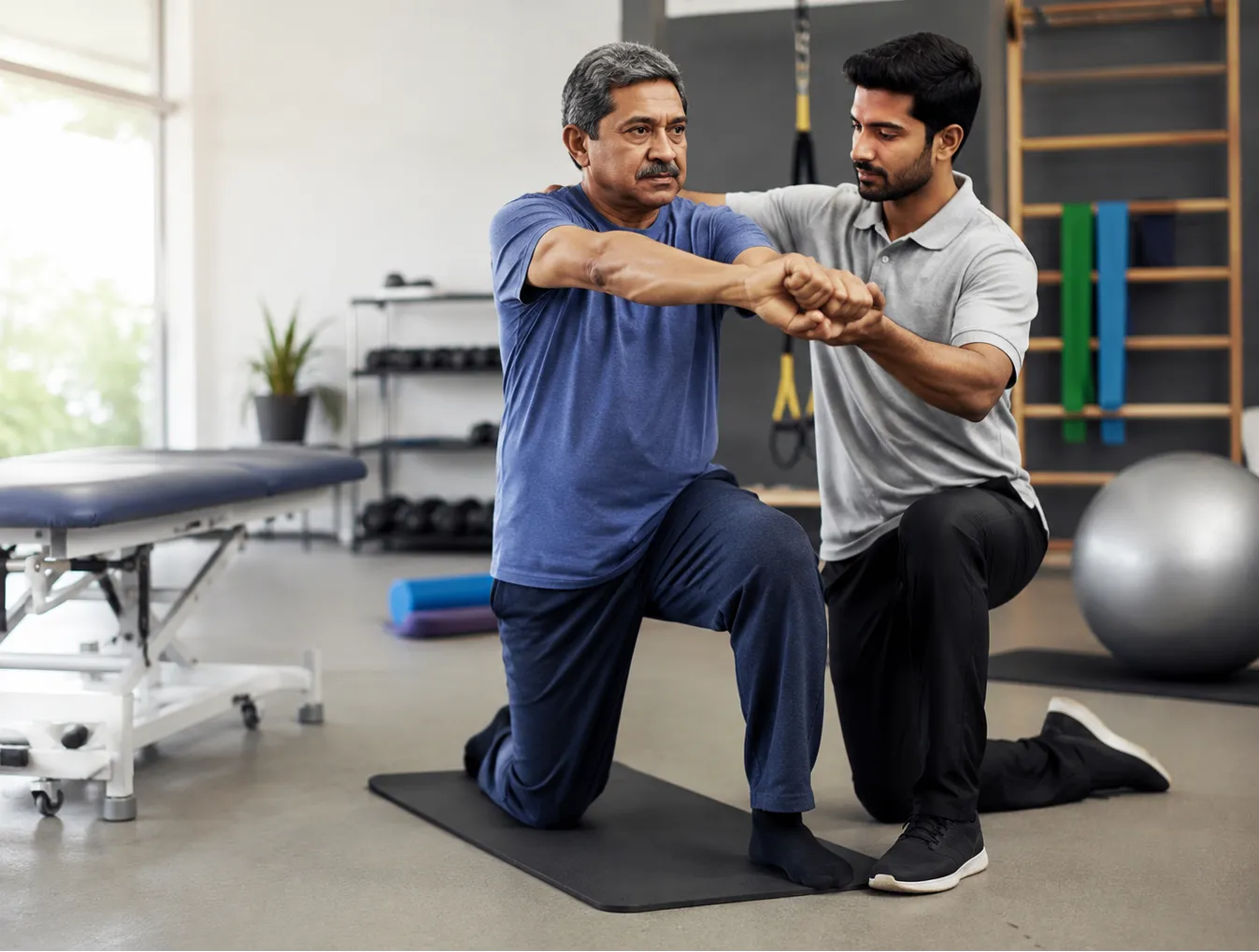
Exercise is central to many physiotherapy programmes, but rehabilitation exercises should not simply be a collection of generic movements. Personalized Exercise Therapy considers the person's condition, current ability, symptoms, functional requirements, and recovery goals.
This individual approach is important because the same exercise can be appropriate for one person and unsuitable for another at a particular stage of recovery.
Why Generic Exercise Plans Have Limitations
Imagine two people experiencing lower-back discomfort.
One spends most of the working day sitting and feels stiff after prolonged desk work. The other regularly exercises but develops discomfort while lifting heavier loads.
Although both report back pain, their physical requirements are different.
A useful programme needs to consider those differences.
The same principle applies to knee problems, shoulder rehabilitation, sports injuries, post-surgical recovery, and mobility rehabilitation for older adults.
What Makes Exercise Personalized?
Individualised rehabilitation can take several factors into account:
- Current pain and movement tolerance
- Joint mobility
- Strength levels
- Balance
- Flexibility
- Previous injuries
- Occupation
- Sports participation
- Daily physical demands
- Recovery goals
The physiotherapist can then select exercises at an appropriate difficulty level.
Someone who has recently undergone orthopaedic surgery may begin with controlled basic movements. A recreational athlete further into recovery may require resistance training, balance challenges, running drills, or more complex functional exercises.
Progression Is More Important Than Variety
A long list of exercises does not necessarily make a rehabilitation programme effective.
What matters is whether the exercises are appropriate and whether they progress as the person's capacity improves.
Progression can involve increasing resistance, adding repetitions, expanding range of movement, changing speed, increasing balance demands, or introducing more complex tasks.
The aim is to create enough physical challenge to encourage improvement without unnecessarily aggravating symptoms.
Technique Also Matters
Performing an exercise incorrectly can change which muscles are working and how forces move through the body.
Supervised rehabilitation can therefore help patients understand positioning, breathing, movement control, and appropriate exercise intensity.
Once technique is established, a home programme can help maintain consistency between physiotherapy sessions.
For busy professionals and active adults in Pune, this can make rehabilitation easier to integrate into everyday routines.
Exercise Can Build Confidence Alongside Strength
After an injury, people sometimes become hesitant about movements that previously caused pain.
Gradual exposure to those movements can help rebuild confidence.
Someone recovering from knee problems might progress from basic strengthening to step exercises, squats, balance tasks, and eventually activity-specific movements. Each successful stage demonstrates that the body can tolerate greater demands.
This psychological confidence in movement is an important part of functional recovery.
At Curador Physiotherapy and Sports Rehabilitation Centre, exercise therapy can be planned around assessment findings and individual functional goals, whether those involve returning to office work, improving mobility, resuming gym activity, or preparing for sport.
Personalized Exercise Therapy works best when exercises have a clear purpose.
Patients should understand what they are doing, why they are doing it, and how the exercise relates to the activity they want to regain. That connection transforms rehabilitation from simply completing exercises into progressively rebuilding useful physical capacity.
Keywords