Sports injuries rarely affect only one moment of activity. A painful knee can change running mechanics, an ankle sprain can reduce confidence during direction changes, and shoulder discomfort can influence throwing or lifting technique. Sports physiotherapy focuses on helping active individuals recover physical capacity while preparing them for the specific demands of their sport.
For athletes and recreationally active people across Pune, Maharashtra, this approach can be useful when returning to running, gym training, football, cricket, badminton, cycling, and other physically demanding activities.
Recovery Needs More Than Rest
Rest may temporarily reduce irritation after some injuries, but returning to sport requires adequate strength, mobility, coordination, and load tolerance.
If these qualities have declined during recovery, immediately returning to previous training levels can be difficult.
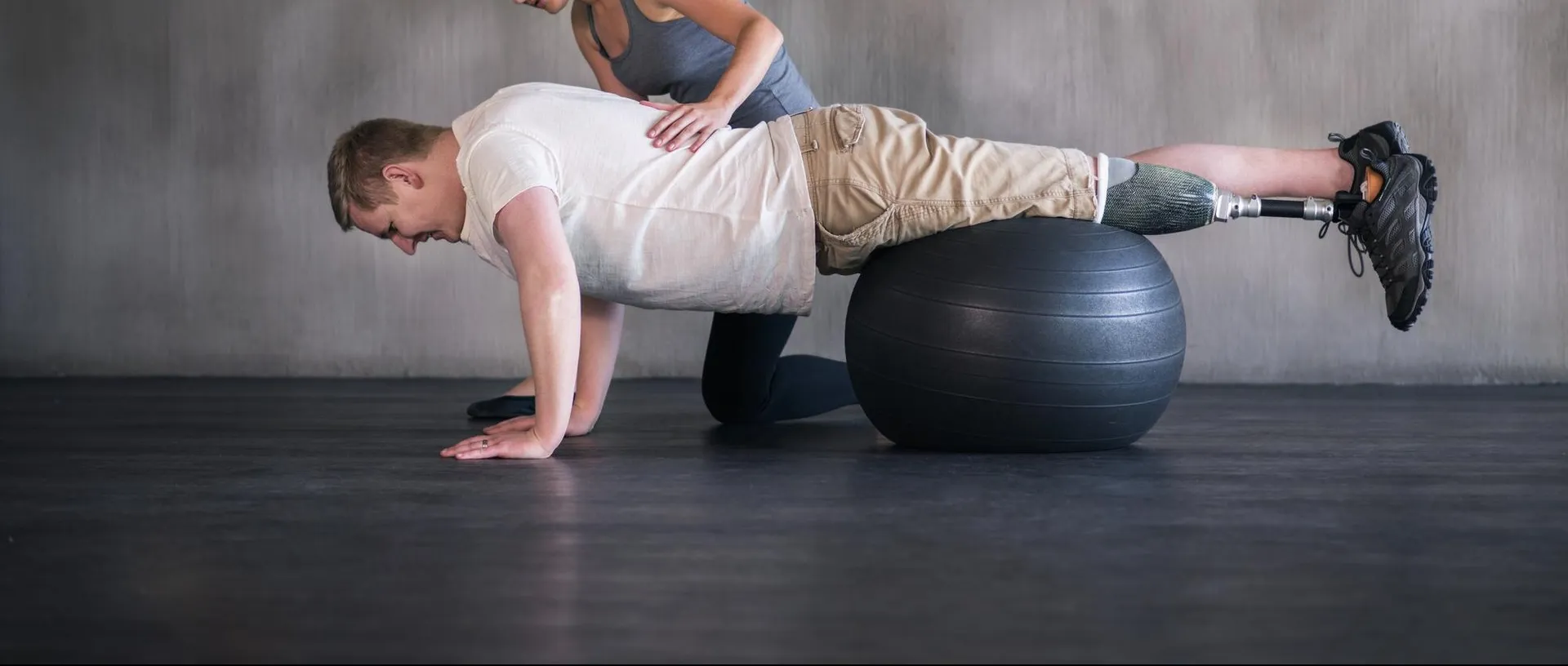
Physiotherapy therefore commonly progresses from symptom management toward active rehabilitation. The programme changes as the individual becomes capable of handling greater physical demands.
Rehabilitation Should Match the Sport
Different activities place different stresses on the body.
A runner repeatedly absorbs force through the lower limbs. A badminton player needs rapid acceleration and direction changes. Cricket may involve sprinting, throwing, bowling, and prolonged periods in specific positions. Strength training requires control under increasing resistance.
A rehabilitation plan should reflect these differences.
Later stages may include exercises that reproduce relevant sporting demands through controlled progressions.
Strength Is Only One Part of Readiness
Being strong in a basic exercise does not necessarily mean someone is ready for unrestricted sport.
Depending on the activity and injury, sports physiotherapy may also assess:
- Balance
- Agility
- Coordination
- Movement control
- Landing mechanics
- Running tolerance
- Change-of-direction ability
- Sport-specific movement
- Confidence during demanding tasks
This broader view helps identify gaps that may not appear during simple strengthening exercises.
Training Load Needs Gradual Progression
One common challenge after injury is deciding how quickly to resume activity.
Returning too aggressively may irritate recovering tissues. Staying at very low activity levels for too long can leave the body underprepared for normal training.
A progressive plan can increase duration, intensity, resistance, speed, and movement complexity in stages.
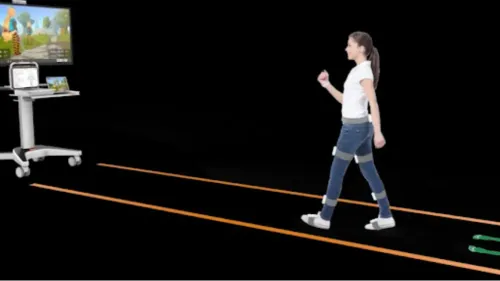
For example, returning to running may begin with controlled walking and strengthening before progressing through short running intervals and eventually longer sessions. The exact progression depends on the individual and the nature of the injury.
Technique Can Be Part of Rehabilitation
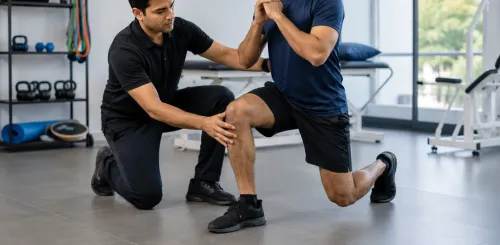
Repeated symptoms sometimes appear during specific movements such as squatting, running, jumping, throwing, or lifting.
Physiotherapists can assess these tasks and determine whether mobility, strength, control, fatigue, or training habits may be influencing performance.
Movement retraining may then become part of the rehabilitation programme.
Returning With Greater Physical Confidence
Curador Physiotherapy and Sports Rehabilitation Centre in Pune works within a rehabilitation setting where treatment can progress from initial assessment toward functional and sport-specific activity.
The aim of sports physiotherapy is not simply to reach a point where an athlete can perform one pain-free movement. A meaningful return involves rebuilding the physical qualities required to participate in training with appropriate control and confidence.
For active individuals, recovery is therefore best viewed as a progression. Symptoms, strength, movement quality, workload tolerance, and sport-specific ability all contribute to determining when the body is prepared for the next stage.
Keywords