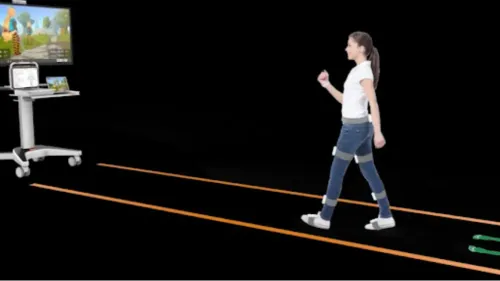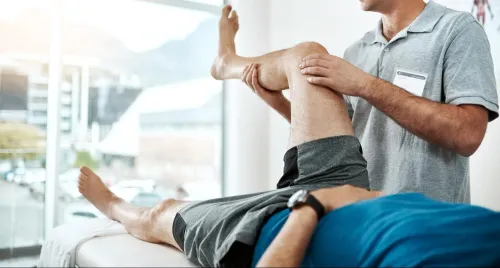
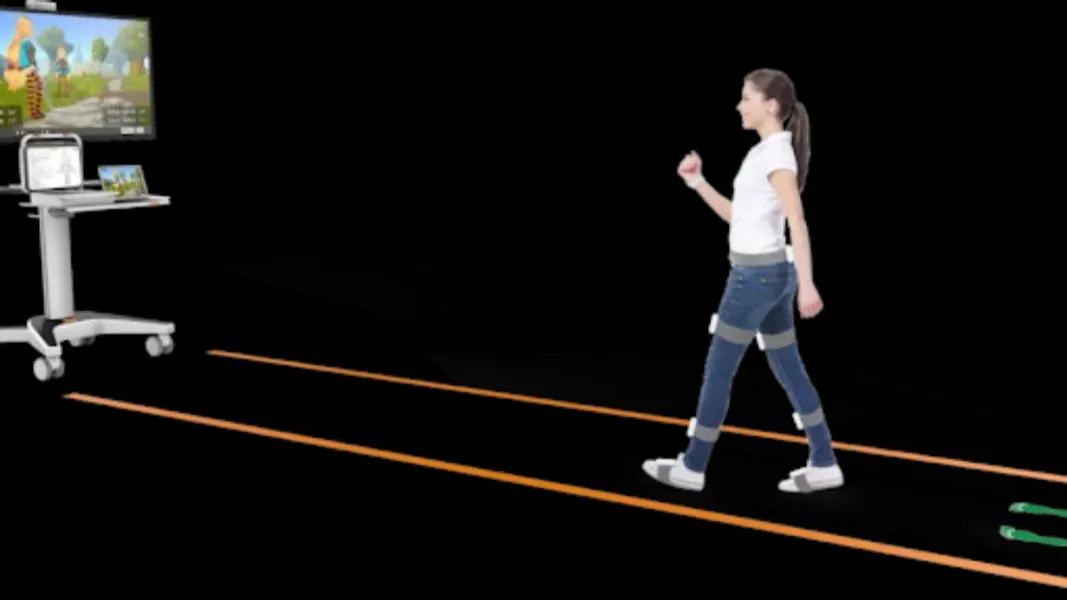
Observation has always been important in physiotherapy. Advances in technology are now providing additional ways to examine how people walk, run, squat, and perform functional movements. AI-Powered Gait and Movement Analysis can add objective information to this assessment process.
The technology should not replace clinical judgement. Its value lies in providing additional movement data that can be interpreted alongside symptoms, physical examination, activity demands, and rehabilitation goals.
What Is Gait and Movement Analysis?
Gait analysis examines how a person walks or runs.
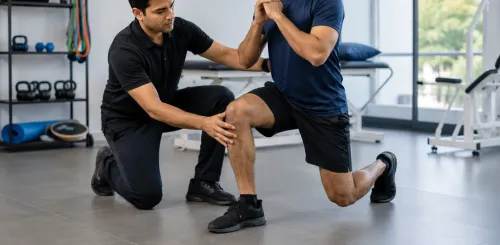
Movement analysis can look more broadly at functional activities such as squatting, stepping, landing, or other relevant movements.
Depending on the system used, analysis may help assess characteristics such as movement symmetry, joint positioning, timing, and other measurable movement patterns.
These observations can help identify areas that deserve closer clinical assessment.
Who May Benefit From Movement Analysis?
Movement analysis can be relevant in several situations.
An athlete returning from a lower-limb injury may need assessment before progressing to more demanding training. A runner experiencing recurring discomfort may benefit from examining running mechanics alongside strength and mobility.
Patients recovering from orthopaedic procedures may also display altered walking patterns.
For example, someone may continue placing less weight through one side even after pain has improved. Identifying this pattern can help guide gait retraining and exercise selection.
Technology Does Not Diagnose Everything
A movement difference does not automatically mean something is wrong.
Human bodies naturally show variation and asymmetry. A technological system may identify a difference, but clinical interpretation is needed to determine whether it is meaningful for that particular patient.
This is why movement data should be considered alongside factors such as:
- Symptoms
- Injury history
- Strength
- Joint mobility
- Balance
- Training demands
- Functional limitations
Data becomes useful when it helps answer a relevant rehabilitation question.
How Analysis Can Influence Exercise Selection
Suppose analysis shows that an athlete has difficulty controlling the knee during a particular movement.
The physiotherapist may investigate related strength, mobility, coordination, and technique. Rehabilitation can then focus on relevant deficits rather than prescribing generic exercises.
Later reassessment can help determine whether the movement pattern has changed.
This provides a more structured way to connect assessment with rehabilitation.
Applications Beyond Competitive Sport
Movement analysis is not limited to elite athletes.
It can potentially support recreational runners, fitness enthusiasts, patients recovering from lower-limb procedures, and people experiencing walking difficulties.
In a city such as Pune, where recreational running, gym training, organised sports, and active lifestyles are common, objective movement assessment can complement conventional physiotherapy evaluation.
Curador Physiotherapy and Sports Rehabilitation Centre incorporates movement-focused rehabilitation approaches that can help patients understand how physical limitations relate to functional activities.
The useful question is not whether a clinic has advanced technology simply for the sake of technology.
Patients should ask how the information will affect their rehabilitation.
When gait and movement analysis helps identify a meaningful pattern, guides exercise selection, supports reassessment, or informs return-to-activity decisions, it can become a practical component of modern physiotherapy rather than simply an additional test.
Keywords