
When pain interferes with sitting, walking, sleeping, exercising, or working, the immediate priority is understandably to feel better. However, Pain Management and Recovery Therapy can be more useful when it addresses both symptoms and the physical factors affecting function.
Temporary relief and rehabilitation are not always the same thing.
For recurring musculoskeletal problems, understanding this difference can help people make better treatment decisions.
Why Does Pain Sometimes Keep Returning?
Pain can have many causes, and persistent symptoms do not automatically point to one specific physical problem.
In musculoskeletal cases, contributing factors may include reduced strength, limited mobility, sudden changes in activity, repeated loading, movement patterns, previous injuries, and prolonged positions.
For example, an office professional may notice neck discomfort repeatedly after long working days. Treatment that only provides short-term relief may not address endurance, workstation habits, movement breaks, or upper-body conditioning.
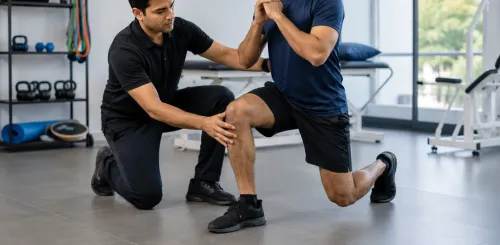
A runner experiencing recurring lower-limb discomfort may need training-load review and progressive strengthening rather than repeated rest alone.
Symptom Relief Has a Role
Reducing discomfort can make movement easier and help someone participate more comfortably in rehabilitation.
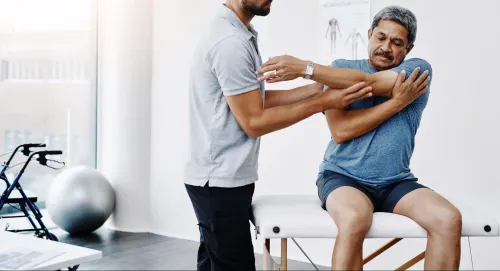
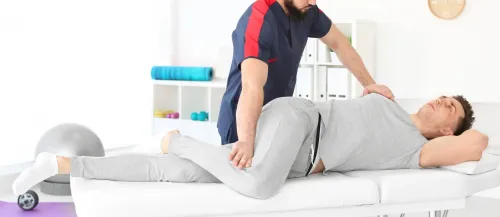
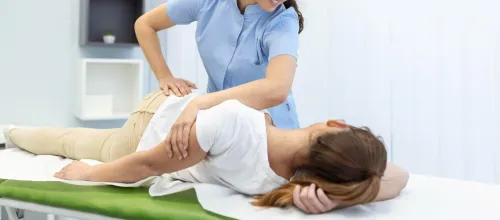
Depending on clinical assessment, physiotherapy may include appropriate hands-on techniques, mobility work, exercise, education, and other interventions.
The important distinction is what happens next.
Once symptoms become manageable, rehabilitation should generally move towards restoring the physical abilities needed for normal activities.
Signs That Recovery Needs a Broader Approach
A more comprehensive physiotherapy assessment may be useful when:
- The same discomfort repeatedly returns
- Pain appears during a particular activity
- Movement remains restricted
- Weakness persists after an injury
- Everyday tasks remain difficult
- Rest helps temporarily but symptoms return after activity
- Confidence in movement has reduced
- Previous treatment has focused mainly on short-term symptom control
These patterns can indicate that functional recovery needs greater attention.
Active Recovery Changes the Focus
Active rehabilitation asks what the body needs to do successfully.
Someone with knee problems may need adequate strength for stairs and prolonged walking. A person with shoulder discomfort may need mobility and control for overhead activity.
An athlete needs enough capacity to tolerate training demands.
This is where progressive exercise becomes valuable.
Instead of repeatedly treating the painful area, rehabilitation develops strength, mobility, coordination, and tolerance according to individual needs.
Recovery Should Match Daily Life
Pune has a diverse patient population ranging from desk-based professionals to active adults, older individuals, athletes, and people recovering from orthopaedic procedures.
Their recovery goals naturally differ.
At Curador Physiotherapy and Sports Rehabilitation Centre, rehabilitation can be planned according to the patient's movement limitations and functional goals rather than using identical treatment routines for every pain complaint.
The objective is not to promise that every pain problem has a simple physical solution. Pain is complex, and different conditions require different approaches.
A practical rehabilitation plan instead identifies what can be assessed and improved, supports comfortable movement, and gradually develops the physical capacity required for everyday activities.
That is what separates a recovery-focused approach from treatment aimed only at temporary symptom relief.
Keywords